Research project in collaboration with McGill and York Universities.
Starting date.
1st October 2024
Ending Date.
31st July 2026
Funded by.
McGill university
Research project in collaboration with McGill and York Universities
Objective of the project: War and armed conflict wreak havoc on the lives of children and families worldwide, forcing millions each year to flee their countries of origin, in search of safety and refuge. At the end of 2021, 6.7 million war-affected children were stranded in protracted refugee situations, reliant on the political will of international and domestic actors to decide their citizenship, legal status, and futures (UNHCR, 2022). While research has examined the legal, bureaucratic, and ethical dimensions of protracted displacement, less is known about its impact on children, particularly from the perspectives of children themselves. Also, protracted displacement among war-affected refugee children within countries in the Global North has rarely been the focus of study or debate, despite that refugee children remain under-protected and neglected in these “hidden” sites of liminality.
Project brief: Using interviews, focus groups and arts-based methods, the short-term objective of this project is to ethnographically explore, document, analyze, and to disseminate the lived realities of war-affected refugee youth in protracted displacement. Taking an engaged, youth-centred socio-ecological approach, the study will use multiple methods over several years to examine identity, rights, citizenship, belonging and imagined futures among war-affected youth in protracted displacement in Greece. Moreover, the study aims to identify the consequences of protracted displacement on youth’s mental health, and well-being.
The long-term objective is to mobilize local knowledge to develop contextually relevant policy and practice for youth affected by war and protracted displacement. War-affected refugee youth in protracted displacement are profoundly overlooked by policymakers in the Global North. Our policy and practice-relevant research aims to engage local communities to identify and generate best practices for youth that can be applied to other contexts of protracted displacement.
Additionally, two young people with refugee and migrant backgrounds have been recruited to assist in the activities and provide insights in the development of questionnaires and events for the project.
The research will use in-depth interviews, focus groups and arts-based workshops to examine the following questions:
How does protracted liminality impact the experiences, needs, challenges, and opportunities of war-affected refugee youth living in Greece?
How does liminality shape youth identity, belonging, rights, citizenship and imagined futures? How does liminality affect refugee youth’s wellbeing, mental health, and access to health care services?
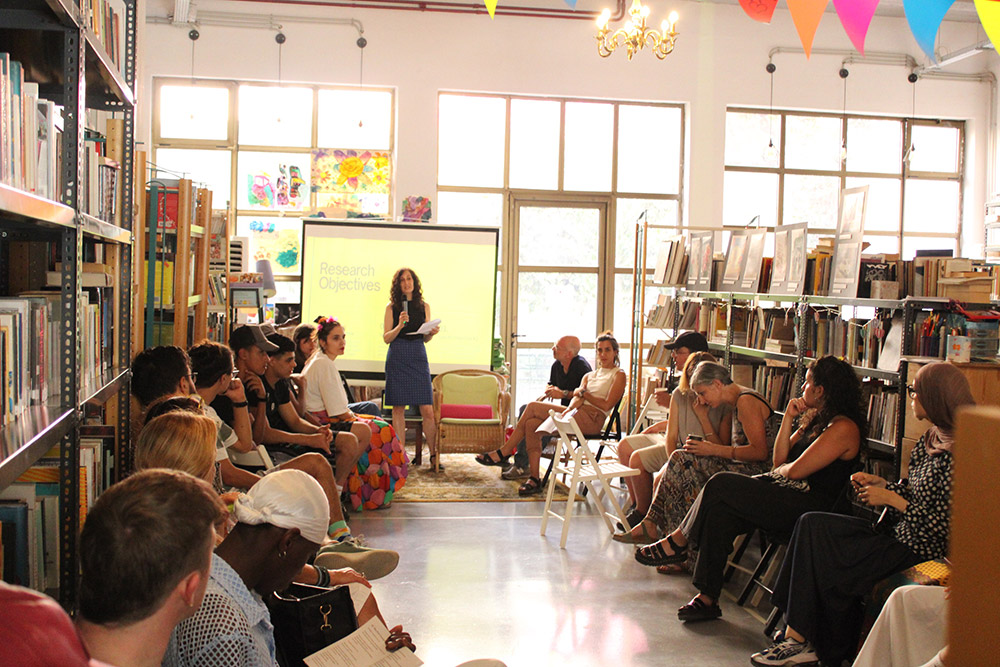
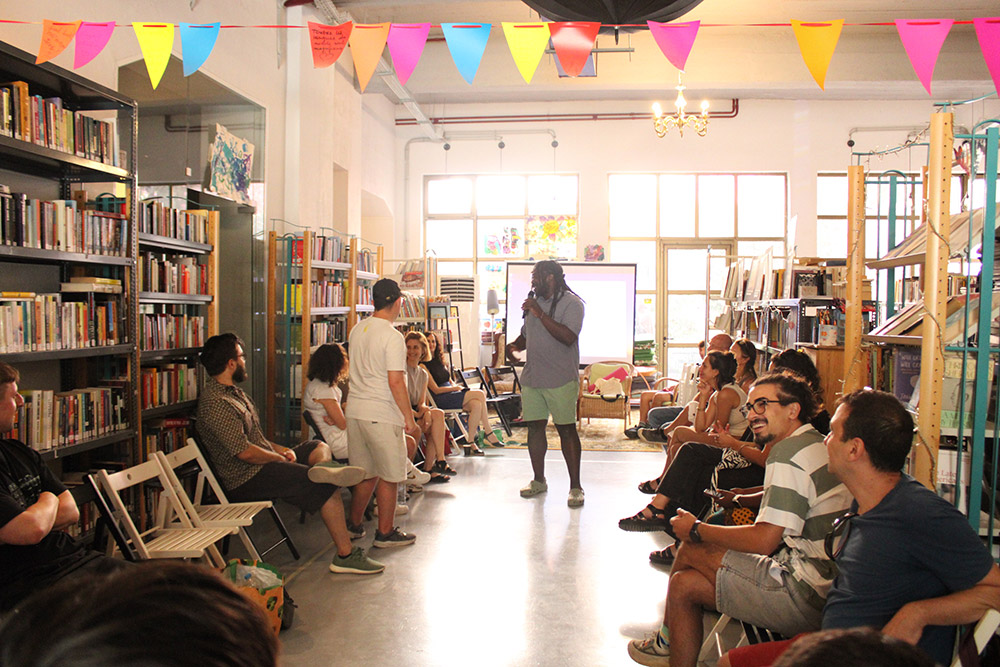
Last Event
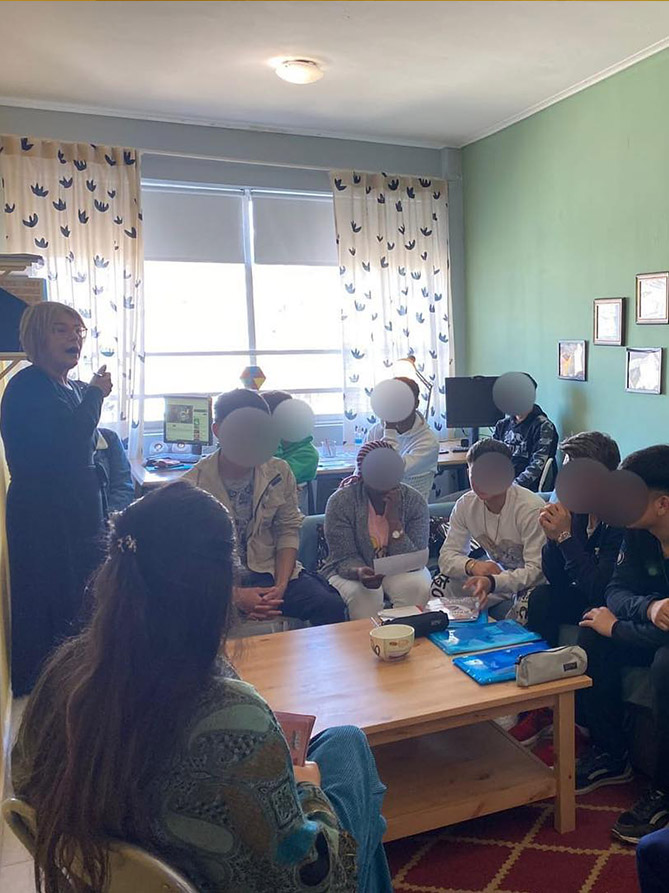
Portrait Workshop
Portrait Workshop
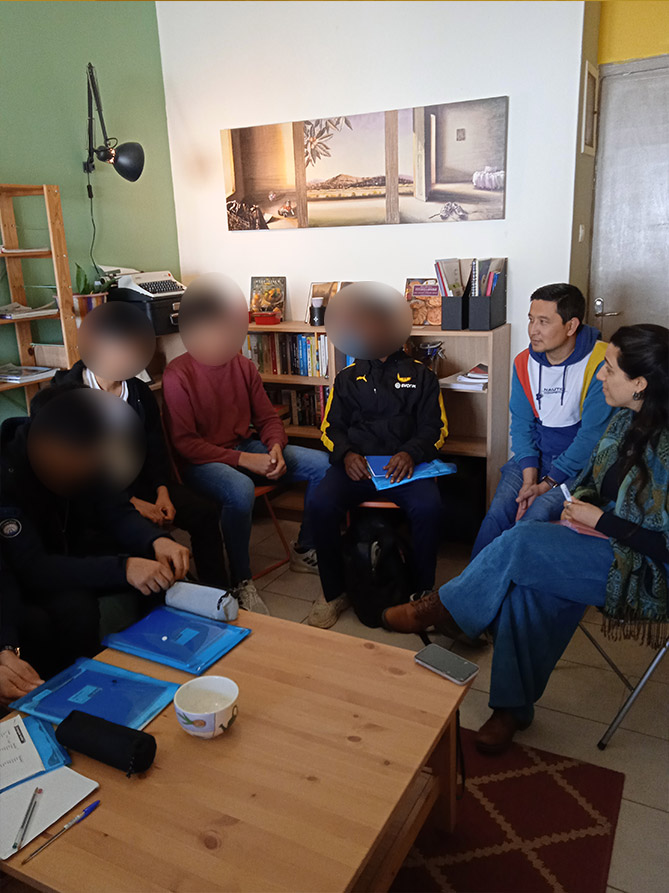
Photography Workshop
Photography Workshop
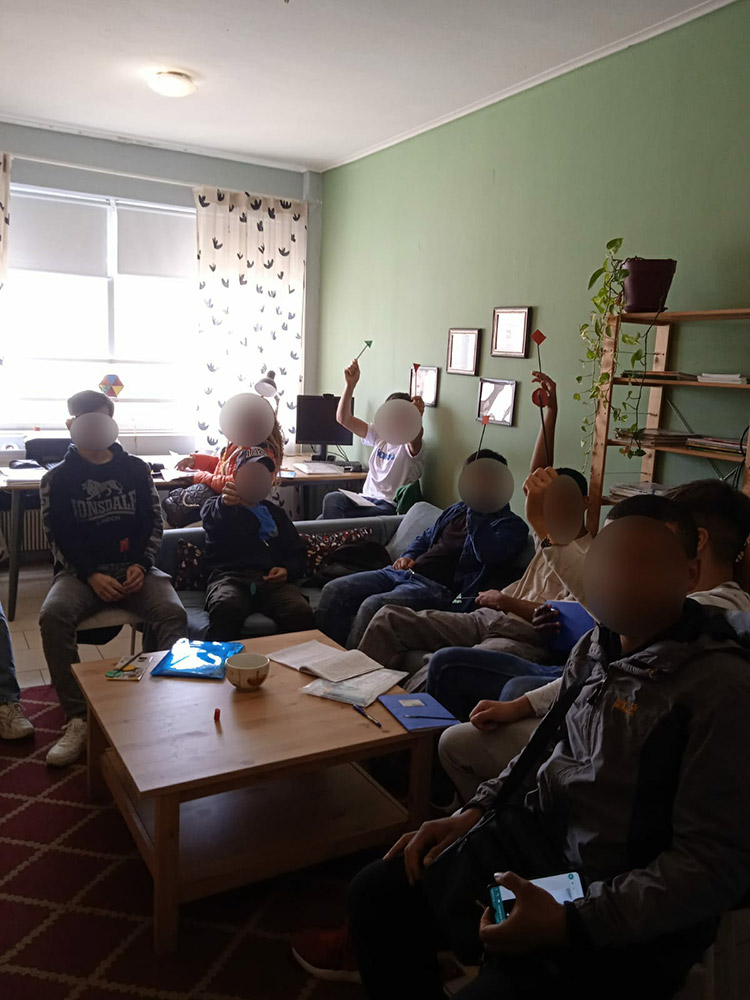
Mapping Workshop
Mapping Workshop
Donor
Partner
Research project in collaboration with McGill and York Universities
Objective of the project: War and armed conflict wreak havoc on the lives of children and families worldwide, forcing millions each year to flee their countries of origin, in search of safety and refuge. At the end of 2021, 6.7 million war-affected children were stranded in protracted refugee situations, reliant on the political will of international and domestic actors to decide their citizenship, legal status, and futures (UNHCR, 2022). While research has examined the legal, bureaucratic, and ethical dimensions of protracted displacement, less is known about its impact on children, particularly from the perspectives of children themselves. Also, protracted displacement among war-affected refugee children within countries in the Global North has rarely been the focus of study or debate, despite that refugee children remain under-protected and neglected in these “hidden” sites of liminality.
Project brief: Using interviews, focus groups and arts-based methods, the short-term objective of this project is to ethnographically explore, document, analyze, and to disseminate the lived realities of war-affected refugee youth in protracted displacement. Taking an engaged, youth-centred socio-ecological approach, the study will use multiple methods over several years to examine identity, rights, citizenship, belonging and imagined futures among war-affected youth in protracted displacement in Greece. Moreover, the study aims to identify the consequences of protracted displacement on youth’s mental health, and well-being.
The long-term objective is to mobilize local knowledge to develop contextually relevant policy and practice for youth affected by war and protracted displacement. War-affected refugee youth in protracted displacement are profoundly overlooked by policymakers in the Global North. Our policy and practice-relevant research aims to engage local communities to identify and generate best practices for youth that can be applied to other contexts of protracted displacement.
Additionally, two young people with refugee and migrant backgrounds have been recruited to assist in the activities and provide insights in the development of questionnaires and events for the project.
The research will use in-depth interviews, focus groups and arts-based workshops to examine the following questions:
How does protracted liminality impact the experiences, needs, challenges, and opportunities of war-affected refugee youth living in Greece?
How does liminality shape youth identity, belonging, rights, citizenship and imagined futures? How does liminality affect refugee youth’s wellbeing, mental health, and access to health care services?
Last Event
Portrait Workshop
Portrait Workshop
Photography Workshop
Photography Workshop
Mapping Workshop
Mapping Workshop
Donor
Partner
Project Material.
Case Study.
Support to find a job & develop
a career
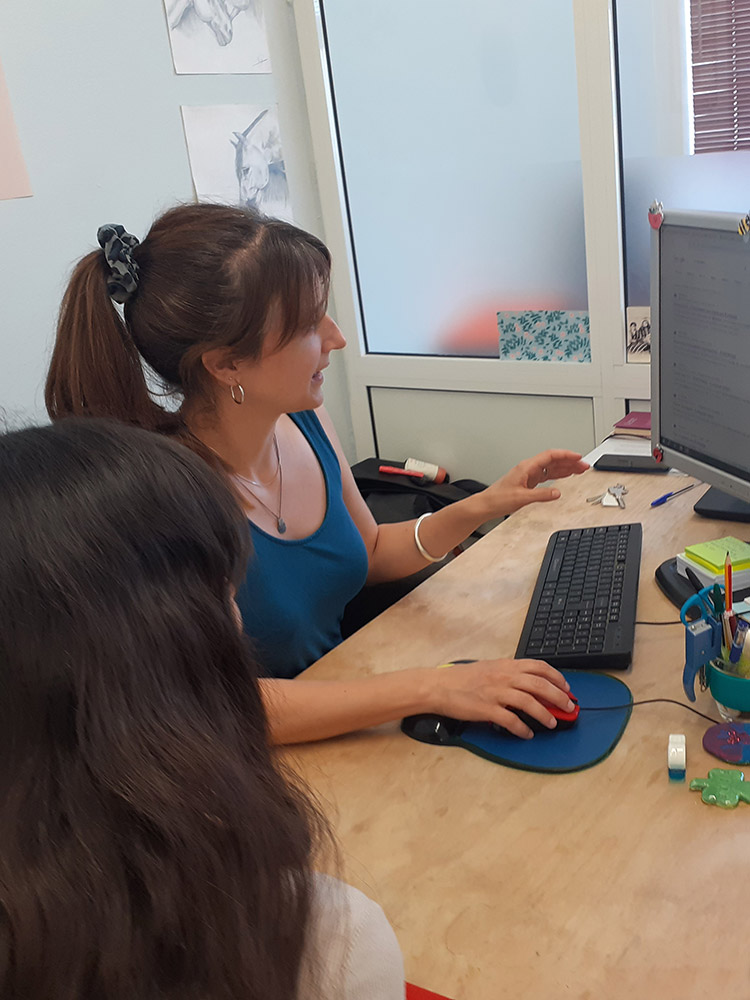
Do you want to create your CV and start looking for a job?
Don’t forget that for getting hired for the first time you will need some documents (Tax Number (AFM), Social Security Number (AMKA), bank account, Insured Person Registration Number (EFKA)), at Velos we can support you to issue them.
Do you already have a job but you are facing some challenges, in Velos Youth we can discuss how you could better deal with them.
Are you thinking of your next professional steps? Here is the place to discuss your ideas and goals for your career development and explore ways to achieve them. Together, we can find vocational training and other educational opportunities to improve your professional skills.
If you are interested, you can book an appointment on-line or in Velos Youth space.
Something else
If you need support in any of the ways not listed you can still contact us for assistance. We may still be able to provide you with support, guidance or information you need, or we may be able to help you find this somewhere else. Velos is part of a large network of organisations and groups that work collectively to try to meet the various needs of young people in Athens.
Social space
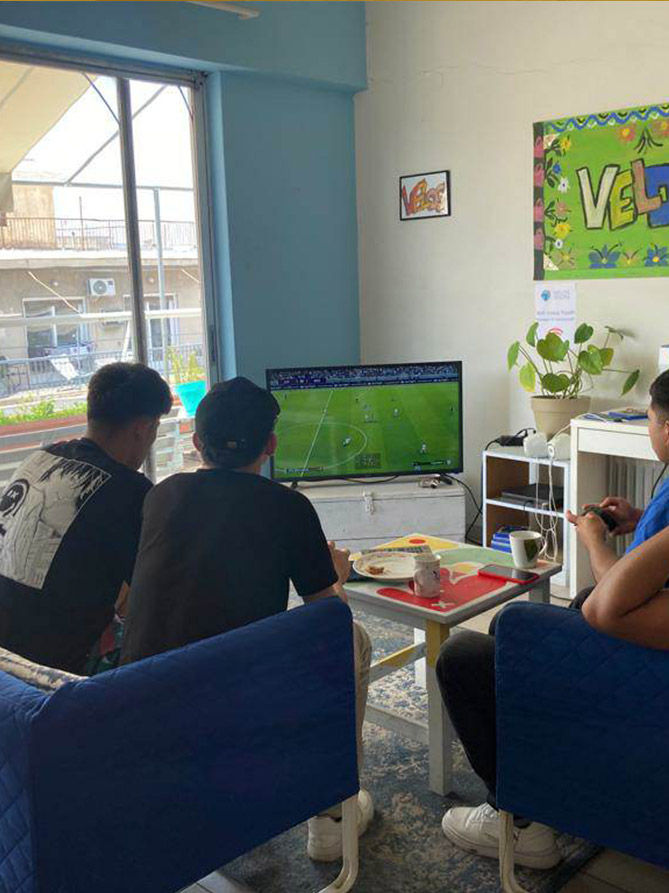
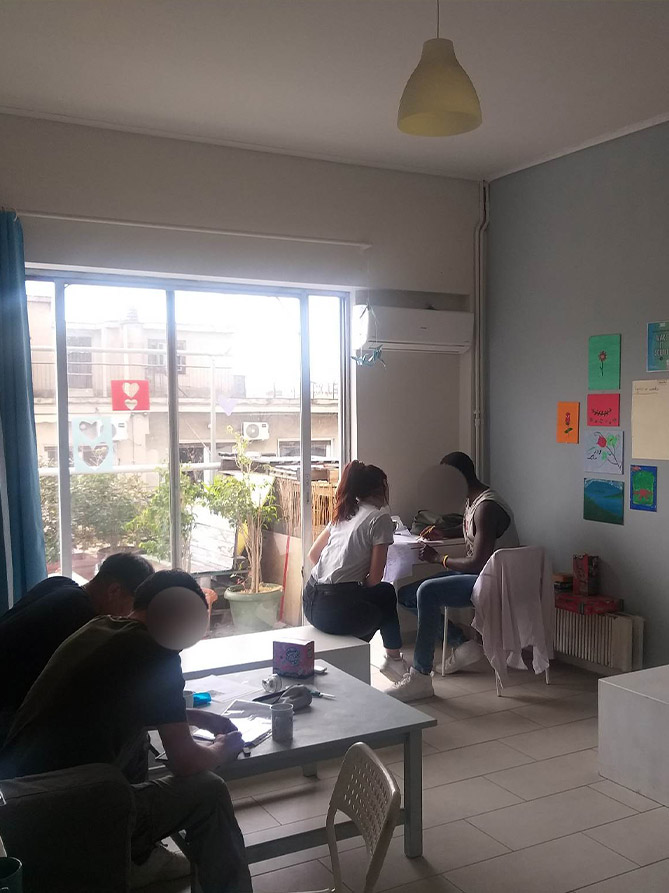
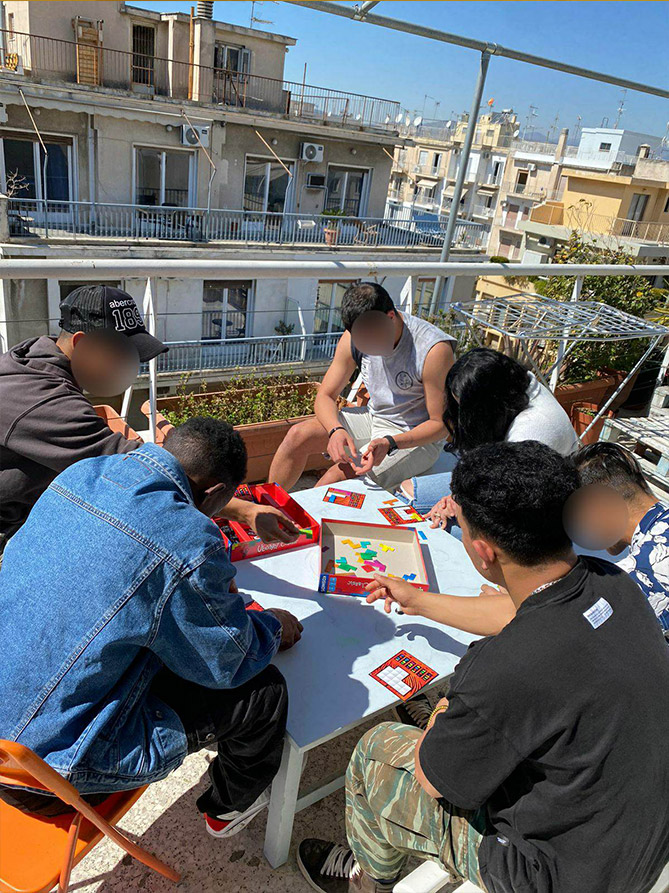
Velos Youth is a place in the centre of Athens where young people between the ages of 16 and 25 can come and feel safe and supported. We have an open-door policy, which means anyone within this age range is welcome to come in. In our space, you can come and connect with others, make yourself a drink, have lunch, play board or PlayStation games, visit our library to read a book or to find a quiet place to do your homework and have access to WiFi and laptops. You can also join our workshops and activities that give an opportunity to learn something new, or develop a new skill. Check out our monthly program for more information on what is coming up.
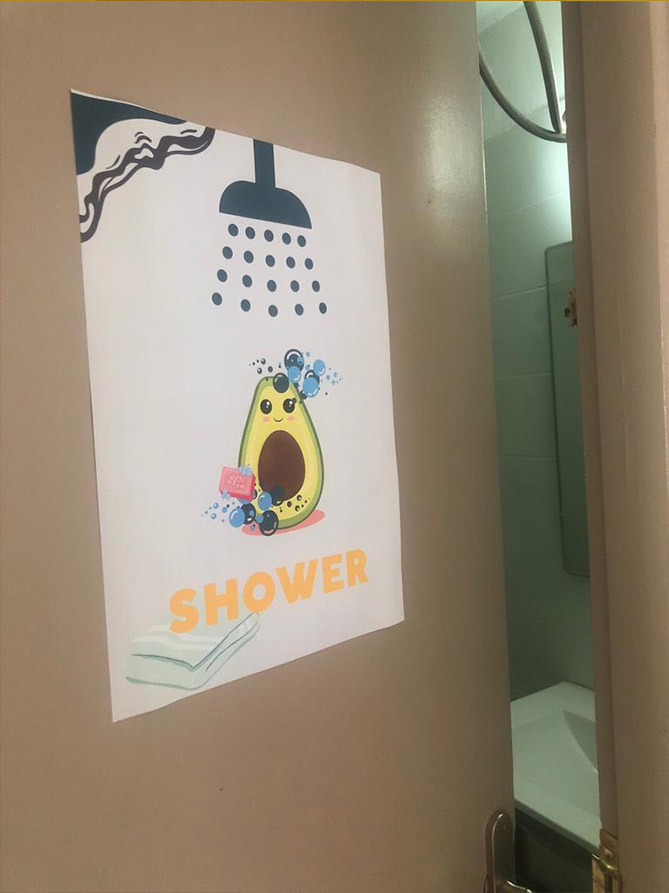
We also provide facilities for showering and laundry, and specialised support in areas such as mental health, housing, legal aid, education, and employability. You can find more information about these on the other service pages.
Social service
The Social Service provided by Velos Youth can help you address a wide range of needs and challenges related to your social integration, emotional well-being, education, and overall development.
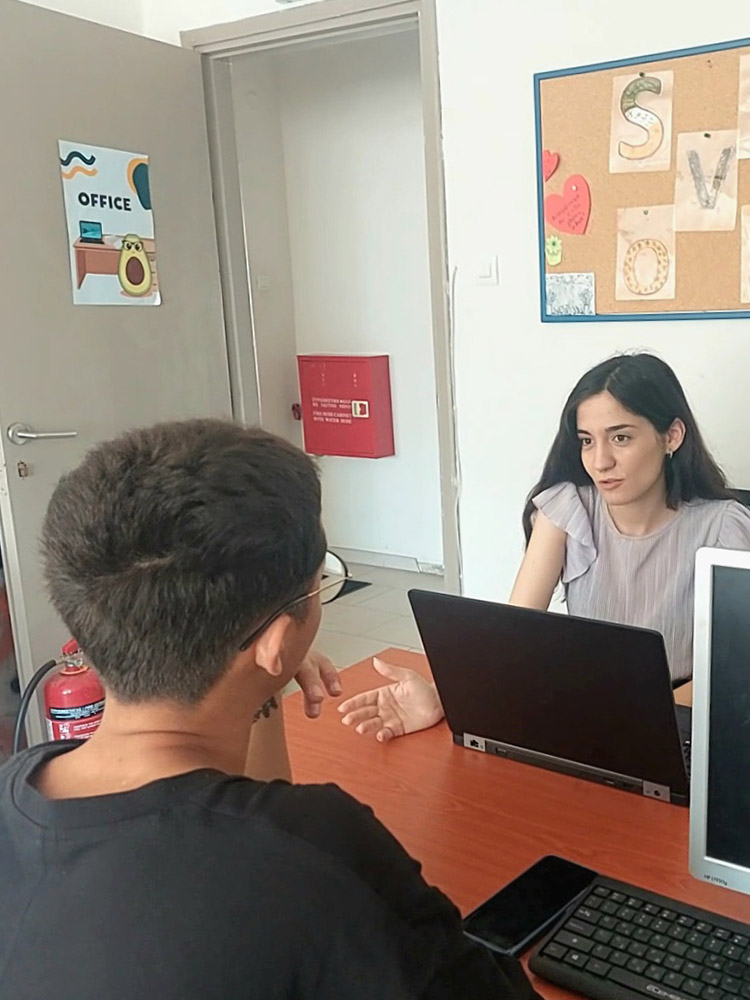
Specifically, we provide individual one-to-one casework for young refugees and asylum seekers. This involves conducting initial registrations, accommodation applications, and making internal and external referrals to the support and services you may need. We can also assist with legal asylum procedures, health related matters, and address basic needs by providing clothing and other essential items. Additionally, we can conduct a best interest assessment (BIA) for a family reunification application should you wish to join a family member in another European country.
We can also support you with bureaucratic issues which may include navigating administrative procedures, completing necessary forms and applications, and providing guidance and information to help you effectively address bureaucratic challenges.
By providing the above elements into the social service provision, Velos Youth can ensure a comprehensive approach to helping you to settle in Athens, or further afield!
Shower & laundry facilities
Every young person who visits our space has access to our shower facilities simply by signing their name on our list, and with a 30-minute notice to set the boiler on to ensure there is enough hot water. We also provide clean towels, shampoo, and shower gel and if we have clothing donations available, we can occasionally offer underwear and t-shirts, as well as razors for shaving and a hairdryer for your convenience.
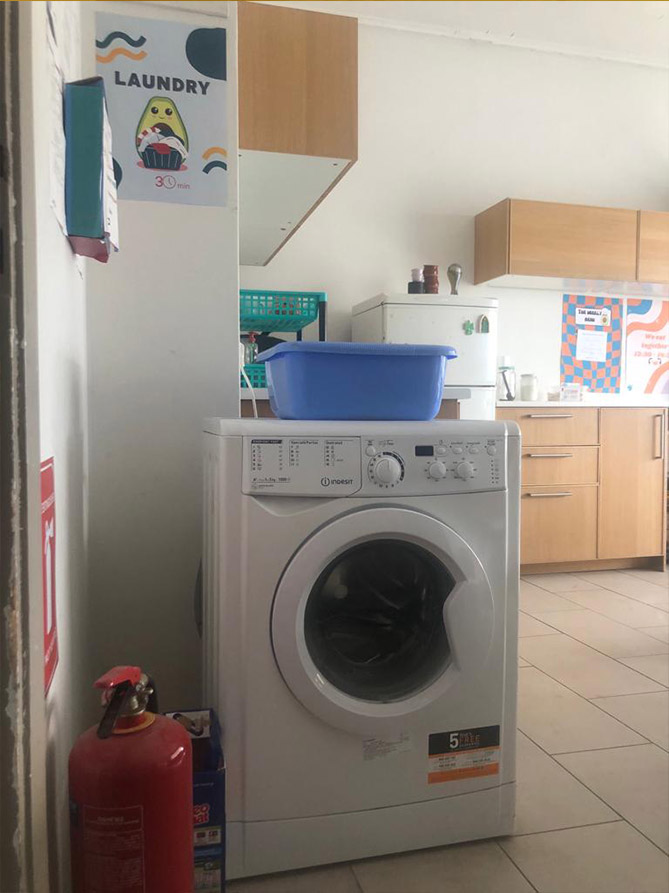
Every young person visiting our space has access to our laundry facilities too. We provide laundry detergent and a dedicated area on the balcony where anyone can easily hang their clothes to dry.
Legal support
We provide various types of legal assistance and support to young asylum seekers, including the preparation for asylum interviews, appeals against negative decisions or age assessment outcomes, filing family reunification applications, and facilitating the renewal of IDs and travel documents. Legal counselling can also be provided for any issue that has to do with labour, social security and in general young people and refugee rights in Greek society. You can also reach out to Velos for information about the monthly legal workshops which cover a variety of topics.
English classes
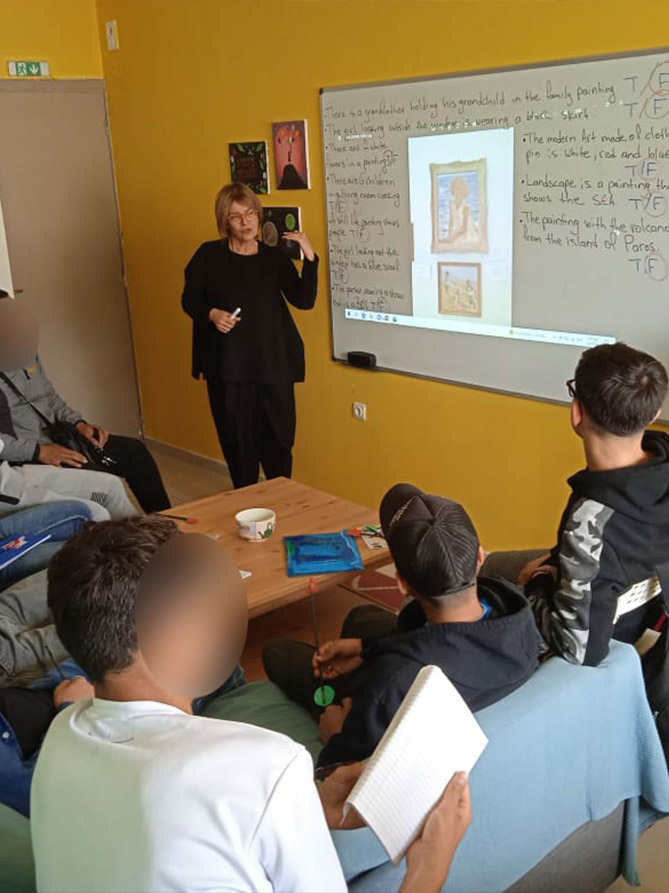
English classes are held at Velos Youth five days a week and are delivered by a professional English teacher. A certificate of attendance is offered upon completion of 80 hours of lessons which can be shown to a prospective employer. Preparation and training for internationally recognised language certificates (Michigan and Cambridge University) are also supported, in specially designed group levels.
Registrations daily.
Why not sign up today?
Hot food
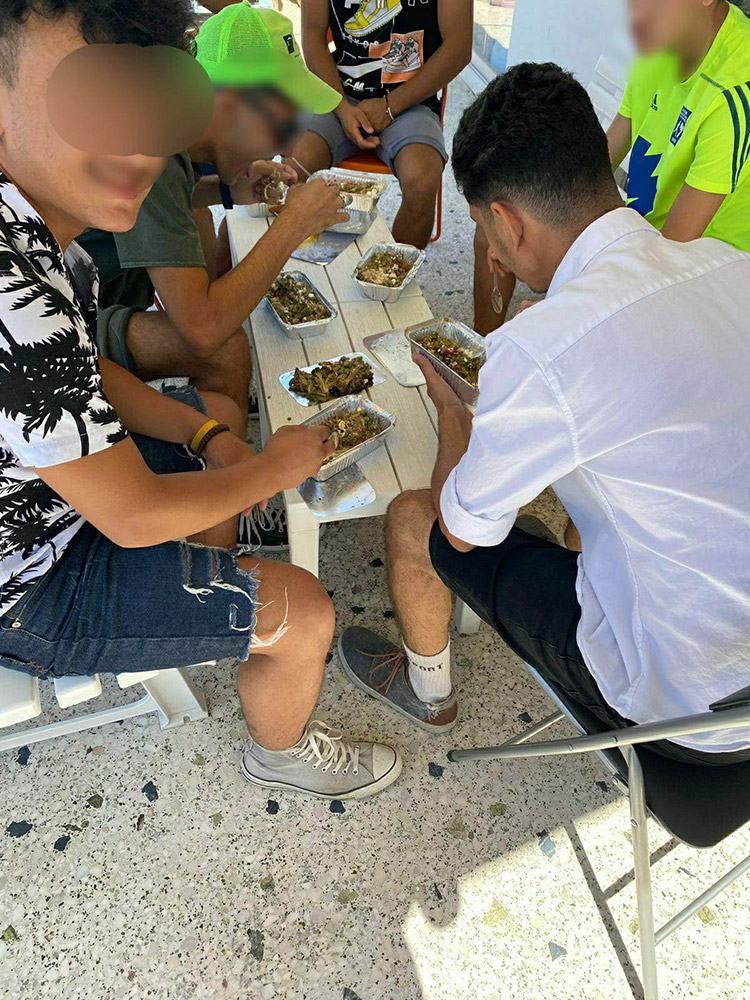
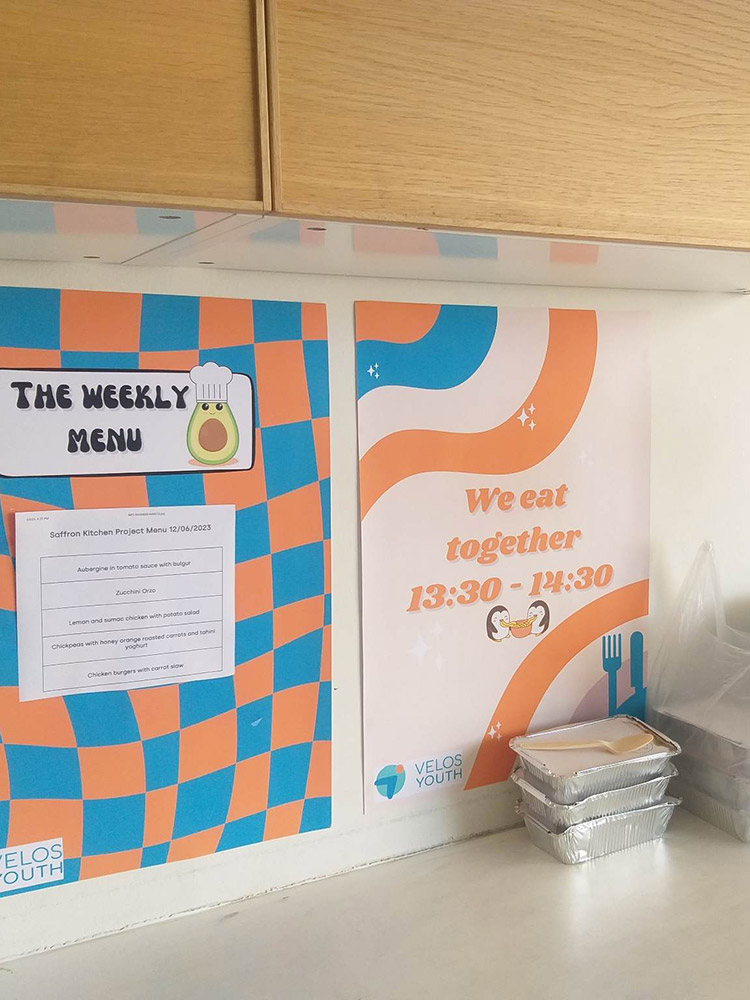
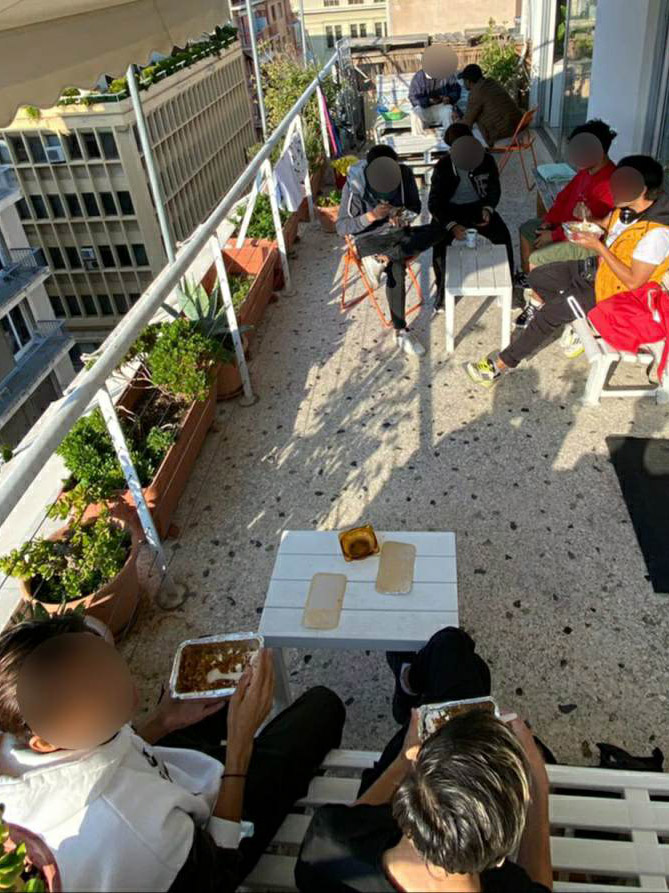
We are very happy to work together with the Saffron Kitchen Project and to offer 35 portions of hot, fresh meals every day at our day center. This partnership allows young people in our center to have a tasty and healthy meal when they visit us. There is a variety of recipes and the use of ingredients reflecting diverse backgrounds contribute in the most meaningful way to the overall sense of care that we try to provide. The menu is printed and displayed in our space so that everyone can see what meals are available during the week and our lunchtime is from 13:30 to 14:30.
Single donations are put to use in accordance with the season, the young person’s needs and the stage of their journey they are at. It is important for a young person to feel safe by having decent clothing, a reliable means of communication, and access to a range of services.
We make sure that is the case, thanks to your help.